2025 Travelers Championship- Noonan’s Outright Picks and Preview

Ryan Noonan

a year ago

Much was made about the unique test that Oakmont Country Club would present the world’s best golfers at last week’s 125th playing of the U.S. Open, and I think it lived up to its hype. Others may disagree, but I wanted the event to look and feel different from a standard PGA Tour setup, and it delivered.
While this week’s track, TPC River Highlands, isn’t nearly as demanding, it requires a strategic game plan and precision from the 72 golfers in the field.
The 2025 Travelers Championship brings us to the last Pete Dye course and the last no-cut Signature Event of the season. The par-70 layout stretches out to 6,841 yards from the tips, the third-shortest course on Tour this season. In past years, we’ve seen a wide array of skill sets show up to Cromwell, Connecticut, and win, which is what Pete Dye sets out to do in all of his designs. Play the best for four days, and you win. What a concept. Success at TPC River Highlands has come in many different shapes and sizes, so handicapping this week can be a bit challenging because the
With fairways being the 10th narrowest and many holes being tree-lined doglegs, many players opt to club down and play “less than a driver” off the tee. Last year’s driver usage was down below 60%, which is notably lower than the 68.9% average across all PGA Tour stops. Perhaps the bigger reason players club down is some of the most penal rough that has been grown to 4+ inches long for this week.
To prevent a complete birdie-fest, the pin positions on the greens are typically in tougher locations. A Pete Dye course is not just going to give away birdies. Many of the green complexes, which are a combination of “northeastern” Poa annua and bentgrass, are also angled away from the directional path of the hole. The “competitive enhancements” made to the course prior to last year’s event didn’t have a significant impact on the overall scoring.
For more course details, check out Ron’s course preview. It’s the best in the business, bar none. Also, don’t forget to check out our new research tools, the course stats page, along with the Tournament Cheat Sheet.
Podcast: Apple | Spotify
YouTube: Betsperts Golf
Key Rabbit Hole Stats This Week:
- SG: Total (Scoring Conditions: Very Easy, Easy, and Average + Course Length: Short and Very Short)
- SG: OTT (Club: Less than Driver and Mixed + Missed Fairway Penalty: Average and High)
- SG: Total (Pete Dye Courses)
- Par 4 Efficiency (Course Length: Very Short and Short)
There are millions of ways to bet on this beautiful game, and my goal with this piece is to touch on the golfers I’m targeting in the outright market this week. Remember to check out the Rabbit Hole, our customizable stat database that can help you pare down your player pool each week.
Please take advantage of the Discord feature and community. It’s the best way to get up-to-the-minute lines and advice, and if you need help getting started, please reach out. That’s where my full card will be posted, along with any live in-tournament bets.
*Betting lines are accurate at the time of publication in Discord.
Noonan’s Travelers Championship Outright Targets
Russell Henley (35/1, “Without Scottie Scheffler” Market)
Russell Henley has a solid but unspectacular history at this venue, making the cut in six of his seven starts, with four of those resulting in T19 or better finishes, highlighted by his T6 finish back in 2018. Still, this is a prototypical Russell Henley course.
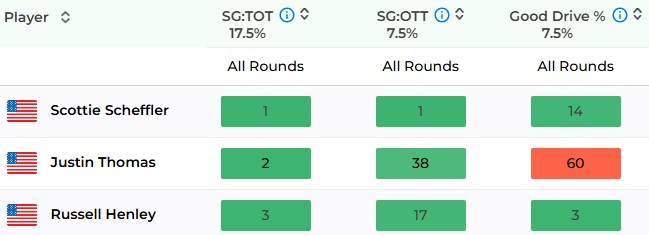
Henley comes to Connecticut on the back of a T5 at the Memorial, which he followed up with a T10 last week at Oakmont, so he checks the recent form box for me. Henley ranks third over the past two years, behind Scottie Scheffler and Justin Thomas, in SG: Total on short/very short courses with easy/very easy scoring conditions. He also ranked third in Good Drive% when there’s a high missed fairway penalty and the field is using “less than driver” at an above-average rate. These are two of the most important metrics in my model this week, which is why Henley finished among the top five golfers for me.
Henley opened in the 50/1 range on Monday morning, but admittedly, I’m terrified of betting on outrights with Scottie Scheffler in the field right now. I’m swimming exclusively in the “Without Scheffler” pool this week. Henley is now down to 40/1 or shorter at most books, so I feel good about the value we got here.
Cameron Young (40/1, “Without Scottie Scheffler” Market)
I backed Cam Young in Canada a few weeks ago, my first time doing so in almost three years, and he nearly got it done, finishing T4. He followed that up with another T4 finish at last week’s U.S. Open, so he has my attention, and I’m not alone. Based on early line movement, Young has been a popular selection once again this week.
The putter has been doing a lot of the heavy lifting as of late, but that’s not the only part of his game that’s trending well.

Young finished T9 at this event last season, firing a 59 on Saturday to put himself squarely in contention. If he can continue to gain strokes on approach, his putter might be hot enough to contend for the third consecutive week.
Maverick McNealy (45/1, “Without Scottie Scheffler” Market)
We’ve seen a lot of good golf from Maverick McNealy over the past two seasons, and although he only has a swing-season win at the RSM Classic to show for it, he’s been competitive at numerous courses with setups similar to what we’ll see this week in Connecticut.
McNealy has top-five finishes at The Genesis, Valero, RBC Heritage, and Memorial this season. Three of those four starts were “Signature Events,” and all relied on setting yourself up well off the tee due to the penal nature of the rough. Out of all the cut-makers at Oakmont, McNealy ranked third in SG: OTT for the week, gaining through both distance and accuracy. If that continues this week, he should be in contention.
Denny McCarthy (70/1, “Without Scottie Scheffler” Market)
Denny McCarthy isn’t striking his irons quite as well as he was back in the spring, but he’s still gained strokes on approach in five of his past six starts. He’s also added ball speed this season, which is likely a big piece of his improved approach numbers since he’s likely hitting a lot fewer long irons compared to seasons past.
He’s also had a few strong showings against tougher fields, including a T8 at last month’s PGA Championship. He’s also played well at other Pete Dye setups over the years, but we all know why Denny is on the outright card. The putter.
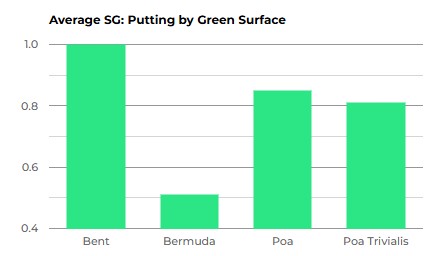
Over the past two years, McCarthy has gained two or more strokes putting in 21.5% of his rounds, trailing only Sam Burns (23.75%) over that same time frame. He’s gained 3+, 4+, and 5+ at a significantly higher rate than Burns has, and it gives him a strong floor nearly every time he tees it up. As you can see, he especially loves these TPC River Highlands greens, which are a blend of bentgrass and poa.
Tom Hoge (90/1, “Without Scottie Scheffler” Market)
A cold putter sent Tom Hoge home early from Oakmont after he missed the cut on the number. Through two rounds, Hoge ranked fifth in the U.S. Open field in SG: BS and that’s encouraging as we move to this Pete Dye design. Hoge has thrived on Dye layouts in his career, including a T3 here last season and again at this year’s PLAYERS Championship. Even on other short, non-Dye tracks, Hoge’s ball-striking numbers have historically been excellent.
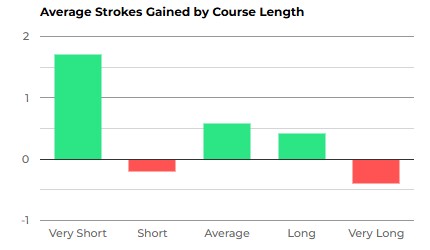
While he’ll occasionally pop up and play well at a longer venue, like his T7 at Muirfield Village last month, his game is better suited for these shorter, positional tracks.